
Last updated November 17, 2026
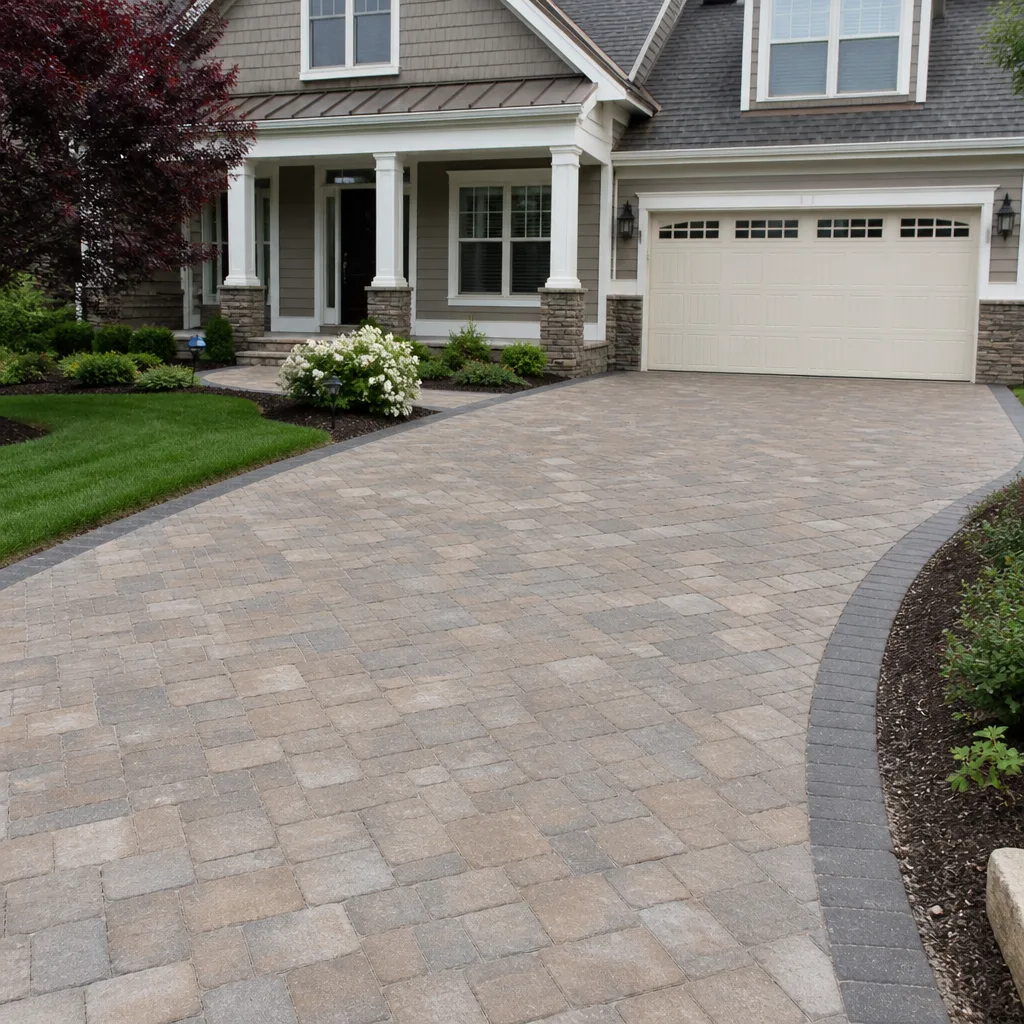 Driveway & pavers
 Kitchen remodeling
 Bathroom remodeling
 Home additions & ADU
 Roofing
 Windows & doors
 Fence
Free written scope consultation - allowances, timeline, and change-order rules on paper before a single trade is scheduled
Driveway & Pavers Troubleshooting: Common Problems and How to Fix Them
Here’s the counterintuitive part: the sunken section of pavers at the end of your driveway usually isn’t a paver problem at all. It’s a base problem. The brick is just the messenger. Patch the top and you’ve poured money into a hole that will open again the next time the ground moves. We’ve walked hundreds of driveways in Arlington and the same three failures come up again and again, and every one of them traces back to a decision made at installation, not months later. This guide helps you sort what you’re seeing into “cosmetic fix” or “something was done wrong from the start,” so you spend money once instead of twice.
Quick Answer
Most paver driveway problems in Arlington come down to three root causes: an under-compacted base, joint sand that washes out during heavy storms, and water that can’t drain away from the surface. Surface cracks and efflorescence are usually symptoms of those three, not separate issues. A repair that fixes the visible symptom without addressing the base, the joints, or the drainage will fail again, often within a single Texas storm season.
Styles & brands we work with
- Kitchen remodeling
- Bathroom remodeling
- Home additions & ADU
- Roofing
- Windows & doors
- Driveway & pavers
- Fence
Table of Contents
- How to Tell Normal Settling From a Bad Base
- Why Paver Joints Wash Out in Arlington Storms
- Efflorescence: When White Stains Mean Trapped Moisture
- Reading Crack Patterns: Trees, Soil Heave, or Too Much Weight
- What You Can Fix Yourself vs. What Needs a Permit
- Drainage and Grading: The Part Nobody Talks About
- Common Mistakes to Avoid
- Frequently Asked Questions
How to Tell Normal Settling From a Bad Base
Every new paver driveway settles a little in the first twelve months. The subgrade compresses, the bedding layer finds its resting place, and you’ll see a slight dip or two that levels out and stops. That’s normal. What isn’t normal is settling that keeps going into year three, or dips deep enough to hold water, or edges that drop more than the middle. Those point to a base that was never compacted in lifts.
A properly built base goes down in layers, usually 2 to 4 inches at a time, with a plate compactor run over each lift before the next one goes down. Skip the lifts, dump 8 inches at once, and the bottom stays loose while the top looks perfect. That loose layer is what collapses later, and it collapses unevenly because the soil underneath it varies. In Arlington we see this most on driveways installed over old gravel or fill, where the installer assumed the existing material was solid enough and skipped re-compaction altogether.
Here’s a simple test. Put a straight edge or a long level across the dip and measure the depth. Settling under about 3/8 inch that stopped moving is cosmetic. Anything deeper, anything that moved in the last six months, or any dip that holds a puddle after a rain needs the base investigated, not the top patched.
- Settle-and-stop: shallow, stable, first year only. Cosmetic.
- Settle-and-keep-settling: base was under-compacted. Rebuild the section.
- Edge drop: missing edge restraint or a restraint that wasn’t pinned. Re-set it.
- Dish-shaped dip holding water: grading or base failure. Both need attention.
If you want the full picture of how a driveway is supposed to be built here, our guide to Driveway & Pavers in Arlington walks through the layers from the soil up.
Why Paver Joints Wash Out in Arlington Storms
Arlington gets its rain in a hurry. An inch and a half in under an hour is a normal spring event, and that water hits a driveway like a fire hose. It runs down the slope, finds the joints, and if the joint sand is loose or the wrong kind, it scours it out in a single storm. Once the sand is gone, the pavers start to shift, and shifting pavers open wider joints, which let more sand out. It’s a cycle.
The fix isn’t just topping off with sand. The right product matters. Standard washed masonry sand in a driveway joint will wash out again. A properly installed polymeric sand, one that’s swept in, misted, and cured according to the manufacturer’s instructions, sets up hard enough to resist runoff while still flexing with the pavers as they move. Cheaper polymeric blends fail faster, and any polymeric sand fails if it’s put down wet or has too much water applied during curing. The product has to be rated for driveways, not just patios. Some are. Some aren’t.
In our experience the joints that fail fastest in Arlington are the ones at the bottom of the slope, right where the driveway meets the street, because that’s where the water moves fastest. If your sand is washing out only there, the fix is often a combination of re-sanding with a driveway-rated polymeric and adjusting the grade at the apron so water sheets off instead of jetting through the joints.
- Clear the failed joints with a screwdriver or oscillating tool, down to about 3/4 the depth of the paver.
- Sweep in a driveway-rated polymeric sand, working from the top of the slope down.
- Compact the pavers lightly to shake sand into the joints.
- Mist gently per the bag instructions, then leave it alone for 24 hours. No traffic, no hose, no rain if you can help it.
Efflorescence: When White Stains Mean Trapped Moisture
Efflorescence is the chalky white haze that shows up on paver faces, usually a few weeks to a few months after installation or after a wet season. It’s mineral salt carried to the surface by water moving through the paver and evaporating. Some efflorescence is harmless and fades on its own. Some is a signal that water is where it shouldn’t be.
The question to ask is whether the efflorescence keeps coming back. A one-time bloom that washes off with a light acid-based cleaner and doesn’t return is surface salt from the manufacturing process. A bloom that returns every spring, especially in the same low spots of the driveway, means moisture is being drawn up from underneath and can’t get out. That points to a base that never drained properly, or a driveway that’s holding water against the house because the grading runs the wrong way.
Arlington’s clay soil is part of the reason. Clay holds water, and when a paver driveway has no proper drainage layer beneath it, the water sits in the bedding sand and moves up through the brick. The white stain is doing you a favor. It’s telling you the water’s not leaving.
- One-time bloom, gone after cleaning: cosmetic. Clean and move on.
- Recurring in low spots: drainage problem under the pavers. Investigate.
- Concentrated along the house edge: grading is running water toward the foundation, not away. Correct it.
- Concentrated at one seam: a broken subgrade drain or a bedding layer that’s holding water.
Reading Crack Patterns: Trees, Soil Heave, or Too Much Weight
Cracks in pavers tell you what pushed them. Three patterns cover most of what we see.
Tree root intrusion
Roots lift pavers in a meandering line, usually starting a few feet from the trunk and heading toward the driveway. The affected pavers rock when you step on them and the lift is uneven, higher on one side. Cutting the root and re-laying the pavers fixes the surface, but the root regrows unless the tree is managed. If the tree is on your side of the property line, that’s your call. Off the property line, the fix is often a root barrier installed during the repair.
Soil heave
Clay soil swells when it gets wet and shrinks when it dries, and in Arlington it does both dramatically. Heave lifts a wider area, not a single row, and often shows as a bump or an arch across several pavers. You’ll see it most in the spring after the wet season. Rebuilding the base with a proper sub-base, and getting water to drain, is the only permanent fix.
Overloaded weight
Cracks that fan out from a single point, or cracks that line up in a straight row where a heavy vehicle parks, are load failures. Pavers rated for pedestrian and residential vehicle traffic will crack if a loaded dump truck or delivery truck sits on them, especially if the base under those pavers was never compacted to handle it. The paver itself is usually fine. The bedding underneath it failed. If the base wasn’t built for the load and the delivery truck was more than the base can handle, that’s an installation problem the installer should have planned for by asking how you use the driveway.
If you’re repairing a section and wondering whether it affects the rest of the property line, our page on Fence Installation in Arlington covers how root damage and grading near fences work together, since roots and water don’t respect property boundaries.
What You Can Fix Yourself vs. What Needs a Permit
Some driveway problems are genuinely doable with a rented tool and a Saturday. Others aren’t, and skipping the permit on a rebuild that touches the right-of-way or changes how water flows is a mistake that comes back at resale.
Realistic DIY repairs
- Re-sanding joints with a driveway-rated polymeric sand (rent a plate compactor for 20 minutes).
- Replacing a single cracked paver with a matching one, using a chisel and a rubber mallet.
- Cleaning efflorescence with a paver-safe cleaner.
- Re-setting an edge restraint that’s come loose, if the paver course behind it isn’t shifting.
Repairs that need a pro
- Any repair that requires pulling up more than a few pavers to get at a failed base.
- Anything that touches the apron, the sidewalk, or the right-of-way. That work is usually permitted in Arlington.
- A driveway rebuild that changes grading toward the house, the garage, or a neighboring property.
- Any repair where the root cause is soil movement, drainage, or an inadequate sub-base. You can fix the surface. Only a proper rebuild fixes the cause.
If the driveway ties into an addition, a garage conversion, or a new Home Additions & ADU in Arlington project, the paving and grading should be planned with the rest of the job, not patched in after. That’s a conversation to have before the concrete trucks show up.
Drainage and Grading: The Part Nobody Talks About
Almost every problem on this page comes back to water. Where does it go, and how fast does it get there? A paver driveway that drains properly will outlast one that doesn’t by years, regardless of how expensive the brick is.
The standard is a minimum of 2% slope away from the house, which is about a quarter-inch of fall per foot. If you can’t see the fall by eye or with a level, the water will pool somewhere. In Arlington the flat lots and the clay soil make this harder than it sounds, and a driveway that’s perfectly flat but piped to a subgrade drain can still be right. The rule is: water has to leave. If it can’t leave downhill, it needs a drain, a swale, or a channel.
We check drainage on every driveway estimate, and if there isn’t a clear path for water, we build one into the scope before any pavers go down. If it needs a new, the change order is on the contract before work starts. No surprise invoice at the end.
Common Mistakes to Avoid
- Patching the top of a sunken section. Adding sand or a few new pavers over a failed base just delays the same failure by one storm season.
- Using play sand or masonry sand in driveway joints. It washes out the first heavy rain. Use a polymeric rated for driveways.
- Skipping compaction lifts. A base dumped in one 8-inch layer never gets compacted all the way down. It fails where you can’t see it.
- Letting a delivery truck park on a residential paver driveway. A loaded dump truck is far more weight than the base was built for. Ask the driver to unload at the street.
- Cleaning efflorescence once and ignoring repeat blooms. A returning bloom means trapped moisture, not a surface stain.
- Rebuilding a driveway without pulling the permit. Permits exist for a reason. The inspector works for you. That’s why we like him.
- Choosing pavers by price alone without checking what’s underneath. The brick is 20% of the job. The base, the drainage, and the edge restraint are the other 80%.
See the difference
 Before
 After
 Before
 After
 Before
 After
When to Call a Professional
Call us when the driveway has sunk more than a half-inch and the dip keeps growing, when a joint blows out every time it rains, or when you’re looking at a crack pattern that traces back to soil movement or tree roots under the slab. Those aren’t surface fixes, and doing them over the top of the same failed base just moves the money around. We also want the call when a repair is going to touch the apron, the sidewalk, or anything in the right-of-way, because those need a permit and a proper scope.
Barrett & Sons Construction Arlington offers free estimates in Arlington – call (888) 590-9867. We’ll take a look, tell you what’s actually wrong, and quote the repair in writing. If it’s a cosmetic fix, we’ll say so.
Frequently Asked Questions
Small spot repairs (a few square feet, resetting pavers and re-sanding) typically run a few hundred dollars, while a section that needs the base re-compacted and rebuilt runs more, and a full driveway rebuild runs into the thousands. The number depends almost entirely on how far down the failure goes. Call (888) 590-9867 for an exact quote – estimates are free, and we’ll tell you whether a repair or a rebuild makes more sense.
Yes, in the first year, if the settling is shallow (under about 3/8 inch) and it stops. Settling that continues past year one, or that forms a dish holding water, is a sign the base wasn’t compacted in lifts. In our experience that’s the single most common installation mistake we’re called out to fix.
Pressure washing makes efflorescence worse. The water drives moisture into the pavers, which brings more salt to the surface. Use a paver-safe efflorescence cleaner instead, and if the bloom keeps coming back, find out where the water is coming from. That’s the real problem.
Often, yes. Any work that touches the right-of-way, the sidewalk, or the apron usually needs a permit, and any rebuild that changes grading needs to satisfy local drainage rules. We pull permits and get inspections signed on every eligible job, and the scope goes in writing before work starts. Call (888) 590-9867 to find out what your specific project needs.
A straight-line crack usually means a joint was installed at a high-stress point (over a rigid edge, or where a base transition happens) or that a single row took a heavy load. It’s rarely the paver’s fault. The fix is to lift, re-compact the base at that joint, and re-lay. If the crack pattern fans out from one spot, look for a point load, like a delivery truck or a parked trailer.
Not if the scope is honest from the start. We put every scope, every allowance, and every price change in a written change order before work happens. If we find something under the base that wasn’t visible on the estimate, we stop and talk to you before we touch it. No surprise invoice at the end. Call (888) 590-9867 for a free estimate and a written quote.
The Bottom Line
Most paver driveway problems in Arlington aren’t brick problems. They’re base problems, joint problems, or drainage problems, and every one of them traces back to a decision made at installation. A repair that patches the surface without addressing the cause will fail again, often within one storm season. Address the base, use the right polymeric sand, get water to leave the property, and you’re ahead of 90% of the driveways we’re called out to. When in doubt, get a second opinion on the written estimate. We offer one free, and we’ll tell you honestly whether it’s a Saturday job or a rebuild. You can start by visiting our Barrett & Sons Construction Arlington home page.
Contact Us
If your driveway is showing any of the problems in this guide – a sinking section, joints washing out, recurring efflorescence, or a crack pattern you can’t read – call us for a free estimate. We serve Arlington and the surrounding communities. Every job comes with the 90-Day Done Right Promise, written on the contract. Every price change arrives as a written change order before work happens. Every eligible job gets permits pulled and inspections signed. Call (888) 590-9867 to schedule your free estimate today.
Written by the team at Barrett & Sons Construction Arlington.