
Last updated November 17, 2026
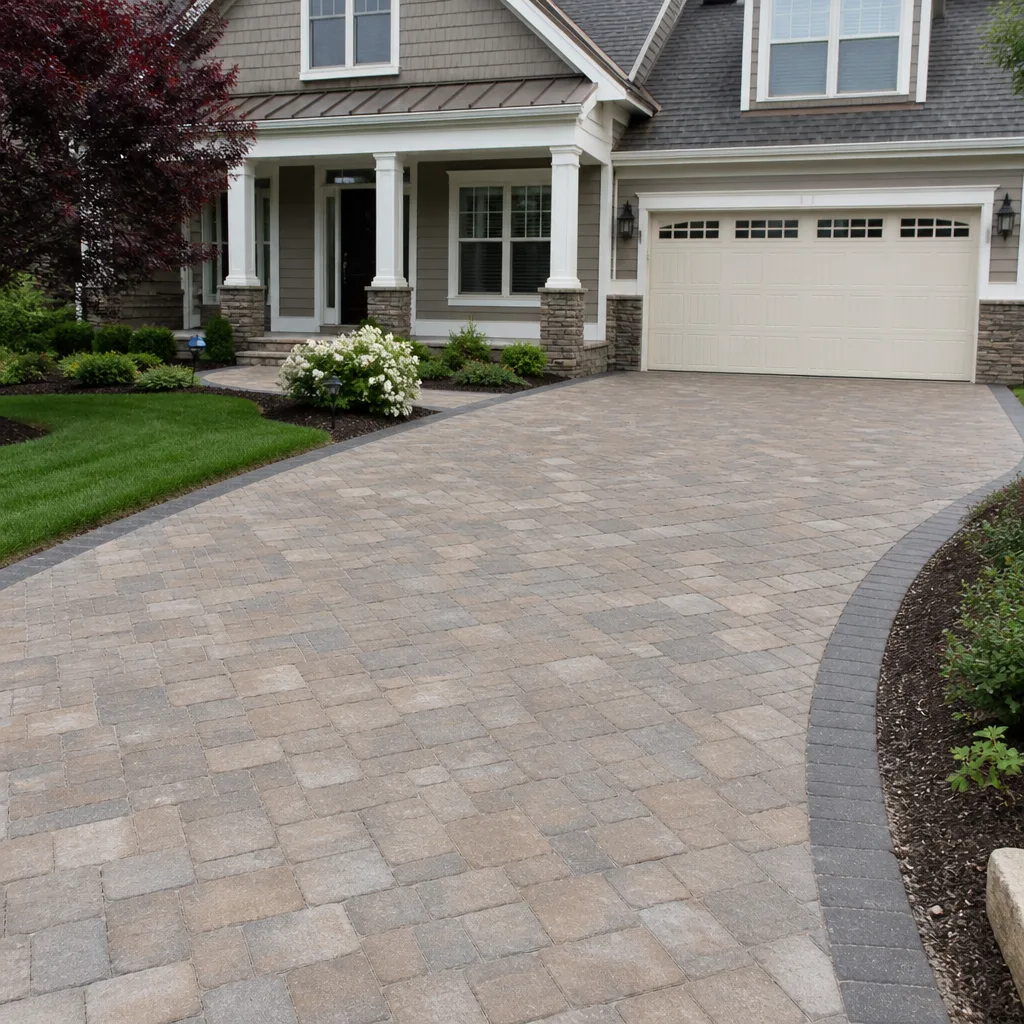 Driveway & pavers
 Kitchen remodeling
 Bathroom remodeling
 Home additions & ADU
 Roofing
 Windows & doors
 Fence
Free written scope consultation - allowances, timeline, and change-order rules on paper before a single trade is scheduled
DIY vs Professional Driveway & Pavers: What’s Safe to Do Yourself
Renting a plate compactor and laying pavers is the easy part. Most of the labor you see in a YouTube video is the top inch of the job. The part that decides whether your driveway lasts twenty years or starts heaving in year three is buried underneath: the base depth for North Texas clay, the slope that carries water away from your slab, the edge restraint that holds everything together when a delivery truck rolls up. In Arlington, we’ve watched homeowners spend a Saturday laying a beautiful paver apron over four inches of sand and then call us two summers later when the whole thing looks like a washed-out riverbed. This guide draws an honest line between what you can do yourself and what will quietly cost you a $12,000 investment. You’ll get the permit rules, the real cost math, the tasks that are genuinely DIY-friendly, and the exact questions that separate a contractor who does the base work from one who just makes the top look pretty.
Quick Answer
Cleaning, re-sanding joints, replacing a single cracked paver, and applying sealer are safe and worth doing yourself. Base excavation, compaction, slope calculation, edge restraint anchoring, and cutting the pavers for a full driveway install are not. Those steps fail invisibly and only show up two or three years later, usually as sinking or heaving you can’t fix without tearing the driveway out.
Styles & brands we work with
- Kitchen remodeling
- Bathroom remodeling
- Home additions & ADU
- Roofing
- Windows & doors
- Driveway & pavers
- Fence
Table of Contents
- The Steps Where DIY Mistakes Stay Invisible Until Year Two
- Why Arlington Clay Changes the Whole Calculation
- What the City of Arlington Requires Before You Touch the Driveway
- The Real Cost Comparison: DIY vs a Professional Bid
- Tasks That Are Genuinely DIY-Friendly
- Questions to Ask Any Contractor Before You Sign
- Common Mistakes to Avoid
- When to Call a Professional
The Steps Where DIY Mistakes Stay Invisible Until Year Two
A paver driveway is a layered system, and every layer below the surface does a job the surface can’t do for itself. When one of those layers is wrong, nothing looks wrong at first. That’s the trap. The pavers are level, the color is right, the joints are tight. Then the first wet spring arrives, the clay underneath swells, and the whole surface starts to move.
Here’s what happens in the order it gets built:
- Excavation to the right depth. A paver driveway over a flexible base needs to be dug deep enough to hold the base, the bedding sand, and the pavers themselves. Skip the depth and every load above stresses a base that has nowhere to spread.
- Base compaction in lifts. Crushed stone gets compacted in layers, not dumped in one pile and hit once with a plate. A single deep pour stays loose in the middle no matter how much vibration goes on top.
- Slope calculation. Water has to leave. A driveway that drains toward the garage, the slab, or a low spot on the property turns into a puddle that sits on clay for days after every rain.
- Edge restraint anchoring. The edge is what keeps the field from spreading outward under load. It gets spiked into the base, not just set alongside the pavers.
Each of those failure points takes about two or three full wet-dry cycles to show. By the time you can see it, the fix isn’t a repair. It’s a re-do. If you’re considering a full install, our Driveway & Pavers in Arlington page covers how the layers come together when the base is done right.
Why Arlington Clay Changes the Whole Calculation
Arlington sits on the Blackland Prairie and its close cousin, expansive clay soil. That soil expands when it’s wet and shrinks hard when it dries. In the summer, it cracks into fissures wide enough to swallow a garden hose. In a wet spring, it can heave a foot. A paver base needs to be sized for that movement, not for the sandy or gravelly soil the homeowner is watching in a video from another state.
What that means in practice:
- Deeper base, not standard base. The base under a North Texas paver driveway has to hold up when the soil below it is moving. That usually means more depth, better compaction, and drainage planned around the eventual high-water season.
- Water routing matters more here than almost anywhere. Because the clay won’t drain fast, the slope and the drainage plan have to shed water quickly and visibly. Water that sits on clay is water that keeps doing damage long after the rain stops.
- Tree roots and existing utilities complicate excavation. Arlington neighborhoods like Interlochen and Dalworthington Gardens sit on mature lots with large trees. Roots and buried lines can force a re-route of the base plan that a YouTube tutorial never mentions.
The soil is the reason a neighbor’s driveway in another state looks fine with a shallow base and yours doesn’t. That’s not a scare tactic. It’s geology.
What the City of Arlington Requires Before You Touch the Driveway
Driveway work in Arlington isn’t a free-for-all. The city has rules about where a driveway connects to the street, how wide it can be, and what has to be done to the approach at the curb. Depending on the scope, that’s likely to trigger a right-of-way permit. If the driveway changes the footprint near the street, adds a new crossing, or affects drainage toward a public drainage path, that permit can be required whether the work is done by you or by a crew.
Here’s why that matters for a homeowner doing it themselves:
- The inspector is looking at the same depth and slope you are. A driveway that fails inspection has to be corrected, and correcting a base failure usually means demo.
- Unpermitted work can come back at the worst time. That’s typically the day you try to sell the house, when a buyer’s inspector finds work on record that doesn’t match the property. The last contractor most homeowners hired told them permits were optional. They were not.
- Liability on a right-of-way issue is real. If a driveway approach creates or worsens a drainage problem or a trip hazard at the curb, that becomes a homeowner problem, not a contractor problem, when you did the work yourself.
Before you rent anything, call Arlington’s permit office and describe exactly what’s being built. If the scope requires a permit, pull it. If it doesn’t, get that in writing anyway. When we take on a driveway job in Arlington, permits are pulled and inspections are signed on every eligible job. Not because it’s paperwork we enjoy. Because the permit inspector works for you, not for the contractor.
The Real Cost Comparison: DIY vs a Professional Bid
The math on DIY paver work is almost never the math the homeowner expects. A typical ad hoc comparison looks like $6 to $9 per square foot for DIY materials versus $14 to $22 per square foot for a professional install. Line up those numbers and DIY looks like a huge win. Then the real numbers show up.
- Plate compactor and tamper rental: typically $100 to $200 per day, often two days minimum. A walk-behind roller for base compaction runs more.
- Diamond blade wet saw rental: $65 to $120 per day, and pavement cuts for edges and corners are non-negotiable.
- Hauling and debris removal: the excavated clay and old surface have to leave the property. A dumpster in Arlington typically runs $350 to $550.
- Base aggregate and bedding sand: measured in cubic yards, and the truck minimum is often higher than a small driveway needs.
- The re-do: if a base or slope failure happens in year two, the fix is demo, re-excavation, re-base, and re-install. That’s most of the job again, plus the original cost.
A written professional bid packages those line items up front: base depth, compaction method, drainage plan, edge restraint system, permit fees, and the labor to do it. When that bid comes with a written warranty, the comparison isn’t DIY vs a contractor. It’s DIY vs DIY plus a warranty against the failure you can’t see. Ask for a free second opinion on any written estimate before you decide, and put two bids side by side on the base depth line. That one line tells you a lot about how the job will be built.
Tasks That Are Genuinely DIY-Friendly
None of this is meant to talk you out of a Saturday project. There’s real paver work around the edges of a driveway that a careful homeowner can handle with good results. These are the jobs that live above the base and don’t decide whether the driveway holds up:
- Pressure-washing the surface. A mid-pressure pass at a working angle lifts the dirt and organic film without stripping the paver face. Don’t hold the wand in one spot or get too close to the joint sand.
- Re-sanding the joints. Joint sand falls out over time. Sweeping polymeric sand back into dry joints and misting it into place is a sensible homeowner job, usually once every two to three years in Arlington’s heat.
- Replacing a single cracked or chipped paver. If one paver is broken and the base around it is sound, prying it up, cleaning the bed, and setting a replacement with fresh joint sand is straightforward.
- Applying sealer. Sealing slows staining and locks joint sand in place. A roller or sprayer on a dry, cool day will do the job, and this one genuinely benefits from being redone on a schedule.
- Cleaning out weeds along the edge and re-leveling a low joint. Small housekeeping work that keeps the surface in good order.
What none of these fix is a base that has settled, a slope that sends water to the slab, or an edge that’s started to spread. Those need excavation. If that’s what you’re facing, our Barrett & Sons Construction Arlington home page has the full picture of how we handle the whole job.
Questions to Ask Any Contractor Before You Sign
The single biggest difference between a driveway that lasts and one that doesn’t is whether the person bidding the job is willing to talk about the base. A crew that can answer these questions in specifics before the contract is signed is likely to build a driveway you won’t think about again for twenty years.
- “How deep is the base, and how is it compacted?” If the answer is “standard depth” with no number, ask for the actual depth in inches and the lift thickness. A written bid should state both.
- “How do you plan the slope and where does the water go?” The answer should describe a specific low point and a specific path, not a vague “away from the house.”
- “What edge restraint are you using, and how is it anchored?” A paver edge should be spiked into the base, not just set at the perimeter.
- “Are permits pulled for this job, and who inspects it?” If the bid doesn’t include permits where required, ask why. The answer tells you how the job will be managed.
- “What’s the warranty, and is it in the contract?” A real warranty is written on the contract and covers workmanship, not just materials.
- “Is there any change order language in the contract?” A driveway bid should be a fixed scope. If something changes mid-job, it should arrive as a written change order before the work happens, not as a line item at the end.
Ask for a free second opinion on any written estimate you’ve already been handed. Two bids side by side on the base depth line will tell you most of what you need to know about the crew you’re considering. If you want to see how we handle this on a real job, our Fence Installation in Arlington page describes the same base-and-permit process on a different exterior project, and the Home Additions & ADU in Arlington page shows what that looks like under a slab.
Common Mistakes to Avoid
- Basing the depth on a tutorial from another state. Sandy or gravelly soil behaves nothing like Arlington’s expansive clay. A base depth copied from a video shot in Ohio will underperform here every wet season.
- Skipping compaction in lifts. Dumping all the aggregate and running a plate compactor over the top once leaves a loose middle layer that will settle across the whole field.
- Sloping toward the garage or the low corner of the lot. It looks tidy on the day of install and becomes a standing puddle after the first heavy rain. Water has to move toward a planned drainage point, not toward the slab.
- Setting edge restraint without spiking it into the base. Under traffic, unanchored edges let the field spread, and the pavers along the border open up. That spread is nearly impossible to fix after the fact.
- Renting a tamper instead of a plate compactor. A hand tamper is fine for a small walkway. A driveway base needs real compaction weight, and something is better than nothing only when it’s the right something.
- Throwing away the excavated clay on site. In Arlington, wet clay stacked on the yard stays wet and heavy. It has to leave the property, and a dumpster is part of the job’s real budget.
- Not asking about permits. That’s the one scope bullet that comes back years later, usually at resale. Ask on day one, before you sign or dig.
When to Call a Professional
Call a professional when the work touches the base, the slope, the edge, or a permit. That’s a full driveway install or replacement, any repair that involves settling or heaving, a widening job that changes the footprint, or a driveway that has started to hold water against the house. Those jobs have a failure mode that shows up two or three years later, and the cost of the re-do is most of the original job. If you’re pricing a paver driveway and want a bid that itemizes the base, the compaction, the edge, the drainage plan, and the warranty line by line, Barrett & Sons Construction Arlington offers free estimates in Arlington. Call (888) 590-9867. Our crew members carry the Barrett & Sons name on every visit, and our technicians have up to 28 years of experience on exactly this kind of work.
See the difference
 Before
 After
 Before
 After
 Before
 After
Frequently Asked Questions
You can do the surface work, but a full paver install over Arlington clay comes down to steps you can’t verify by looking at them. Cleaning, re-sanding, replacing a single paver, and sealing are safe homeowner jobs. Base excavation, compaction, slope, and edge anchoring are not. If the base is wrong, the driveway looks fine for two or three years and then fails in a way that requires a full tear-out.
A professionally installed paver driveway in Arlington typically runs $14 to $22 per square foot, with the base depth and drainage plan driving most of the difference. A DIY install of materials and tool rental often lands at $6 to $9 per square foot, and that’s before a single re-do. Call (888) 590-9867 for an exact quote. Estimates are free.
It depends on the scope. Work at the right-of-way, changes to the driveway approach, and new crossings often require a city permit in Arlington, and the rules apply whether you do the work yourself or hire a crew. Call the city permit office with your exact scope before you rent anything, and if the project moves forward, get the permit pulled. Skipping it can cost you at resale.
The right depth depends on your specific soil, the existing subgrade, and the drainage plan for the property. What doesn’t change is that Arlington’s expansive clay needs a deeper, better-compacted base than the shallow base you’ll see in videos shot on sandy soil. A written bid should state the actual depth in inches before you sign.
It shouldn’t, and with a written contract it doesn’t. Every scope, every allowance, and every price change comes in writing as a change order before the work happens. An allowance that isn’t on paper is a surprise waiting for a date. Ask for that language in the contract before you sign anything.
Yes. Permits are pulled and inspections signed on every eligible job, because the inspector is the person who verifies the base, the slope, and the right-of-way detail before anyone gets paid. If a contractor tells you permits are optional on your project, ask them to put that in writing. Call (888) 590-9867 to ask about your scope.
The Bottom Line
There is honest DIY work on a paver driveway: cleaning, joint sand, single-paver swaps, and sealing. Those keep a good driveway looking good. What you cannot do yourself with confidence is the base: excavation depth for Arlington clay, compaction in lifts, slope and drainage, edge anchoring, and pulling the permit. Done wrong, those steps look fine for two or three years and then require a full tear-out, which is most of the cost of the original job. The honest line is this: if the base is already sound, work the surface. If it isn’t, or if you’re starting fresh, get a bid that puts the base, the drainage plan, and the warranty in writing before you dig.
Contact
If you’re in Arlington and weighing a driveway project against a Saturday DIY attempt, call (888) 590-9867 for a free estimate. We’ll put the scope, the base depth, the drainage plan, and the warranty line by line on paper, back it with our 90-Day Done Right Promise, and answer the phone when you have a question mid-week. A live person picks up, day or night. Estimates are free, and the second opinion on any written bid you already have is free too.
Written by the team at Barrett & Sons Construction Arlington.